
Out of stock
Between the end of winter and the start of spring, the baby’s room can go from a cool atmosphere in the evening to a space that is too warm during the day… with air often dried out by the heating. The aim is not to "heat more", but to stabilise: a comfortable temperature and air that is neither too dry nor too humid. In this guide you will find a clear comparison of heating and humidifying solutions, practical guidance, and common mistakes to avoid.
Before comparing devices, keep two simple ideas in mind:
To complete the organisation of the room (storage, nightlight, rug, curtains), you can pick ideas from a selection of practical decorative solutions to organise the baby’s room to limit draughts and make the space more "cosy" without overheating.
When outside temperatures change, the home "reacts": the heating turns on in bursts, the air dries out, and the room can be colder near the walls or window. For a baby, this can result in:
If you notice more wakings at this time, it is not necessarily a "bad habit": it is often a normal adjustment. For practical tips, you can also consult advice on handling night wakings during a seasonal change.
When available, this is often the simplest solution for a baby’s room: the heat is more even, without a direct blast. What helps:
Limits: some rooms are less well insulated, and the air can become dry when the heating runs for a long time.
A portable heater can help on chilly nights (notably in Morocco, when days are mild but nights are still cold). Strengths:
Important precautions:
It warms up quickly, but it circulates the air and can increase the feeling of dryness (throat, nose). It can also create less even warmth: very hot nearby, cooler elsewhere. Reserve it for occasional use (warm the room for a few minutes), rather than for a whole night.
In a baby’s room, combustion solutions (gas, paraffin, brazier, etc.) are generally not recommended: they require rigorous ventilation and carry risks (less healthy air, poorly managed humidity, safety). If your home depends on them, prefer using them in living areas, and look for a safer alternative for the room.
When the heating runs, indoor air can become too dry. A humidifier can improve comfort (mucous membranes, throat). But it must be used sensibly:
The common trap: "the more steam, the better". In reality, too much humidity can increase the feeling of cold and cause respiratory discomfort.
Depending on your home, you can improve the air balance with simple actions:
These measures do not replace a humidifier if the air is really very dry, but they often avoid the need for one all the time.
Rather than buying “the best device”, the most effective approach is a small routine adapted to your habits:
If baby seeks extra comfort during these periods (lighter sleep), some parents wonder about pacifier vs thumb. To clarify, here is a helpful article: pacifier or thumb: how to help baby calm down.
At this age, baby wakes often (this is normal) and can be sensitive to temperature changes. A stable room and a simple routine help: comfortably heated room, suitable clothing, and avoid sudden changes (moving from a very warm room to a cool bedroom). Expect frequent wakings: the aim is mainly to limit what adds discomfort (air that is too dry, overheating).
Sleep often becomes more predictable, and baby can react more to a room that is too dry (blocked nose) or too hot (restlessness). This is also the age when rhythm changes sometimes appear. If wakings increase during transitions, think “environment” before thinking “regression”. Slightly adjusting the heating and improving ventilation may be enough.
Baby moves more, may uncover, press against crib bars, change position. As a result: baby may feel cold at times, or on the contrary sweat if the sleeping bag is too warm. Prefer adjusting by layers (bodysuit, pyjamas, sleeping bag) rather than sharply increasing the heating. At this age, micro-wakings are common; the important thing is to check that the room stays comfortable through the night, not only at bedtime.
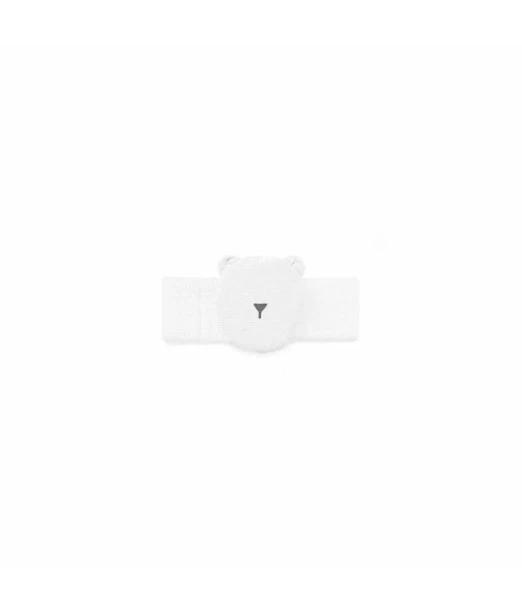
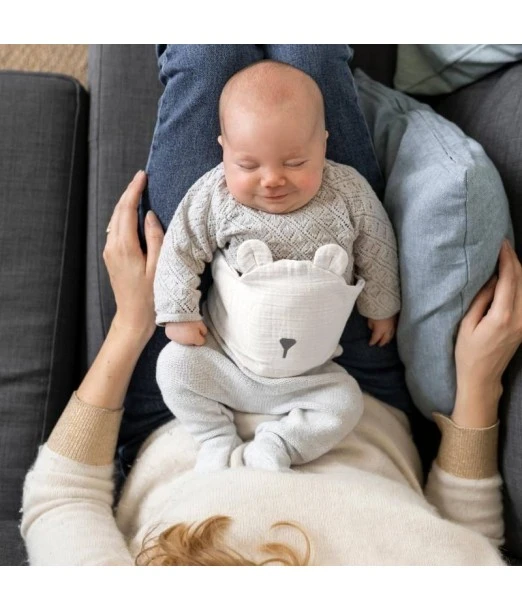
Sometimes the need is not to “turn up the heating”, but to relieve a specific discomfort (tummy, small aches). In these situations, a localised heat solution can be more relevant than raising the room temperature. For example, the Doomoo Easy Dream pain-relief heating belt for the belly is designed to provide targeted warmth (rather than changing the ambient air). The idea remains to keep a safe, stable sleep environment while responding to a temporary comfort need.
Precautions: use the belt only under adult supervision and always check the temperature of the heat pad before use. Remove it before putting baby down to sleep: no heat source in the crib.
During transition periods, some babies wake more and ask for feeds more often. If you give baby bottles, reducing waiting time can limit night stimulation (light, activity) and help baby fall back asleep faster. A multifunction device such as the MAM Express 6-in-1 electric steriliser and bottle warmer can help create a smoother routine (faster preparation, fewer handling steps), especially when nights are still cool.
When the weather changes, you may feel like you are “starting over”. To conserve your energy:
A practical layout also helps day to day: for example, place essentials within reach and organise the space. If you are equipping the room, consider choosing a diaper pail to limit trips and keep the room pleasant, especially when you want to avoid leaving doors open for long at night.
The best solution is one that provides a steady warmth without a direct draught towards the crib. Generally, fixed or central heating is more stable. A portable heater can help occasionally, but it should stay away from the bedding and be used with caution.
Rely mainly on the back of the neck and upper back: a damp neck can indicate overheating; a cold neck together with a tense baby can indicate they are cold. Hands and feet are sometimes naturally cooler, so they are less reliable on their own.
Yes, often. Heating can make the air seem “dry”, which can bother some babies (dry nose, sore throat). Regular airing and light humidification (if needed) can improve comfort.
Not systematically. If you notice very dry air (discomfort, dry nose, more frequent wakings during the heating season), a humidifier can help. The important thing is to maintain it properly and avoid over-humidifying.
Place it out of reach, on a stable surface, away from the crib. Avoid having the flow (mist) directed at the baby’s face or wetting the bedding. The goal is to improve the ambient air, not to make the sleeping area damp.
That depends on the model and its safety features. In a baby’s room, a stable and secure solution is usually preferred. If you use a portable heater, run it before bedtime to bring the room to a comfortable temperature, then lower/turn it off according to the situation and the manufacturer’s recommendations.
Day/night variations are more marked: the room can be too warm at the start of the night then cool at dawn. Intermittent heating and drier air can also cause discomfort. These factors can make sleep lighter, even if the baby was sleeping well before.
Check window seals, close curtains in the evening, and avoid placing the crib near a window or a frequently opened door. Short, regular airing is preferable to leaving a window ajar for a long time, which cools the room down.
Yes, often in small steps. During transitions, it can be useful to have two options ready (a slightly lighter and a slightly warmer pair of pyjamas) and adjust according to observed signs (sweating, wakings, discomfort). The idea is to avoid compensating only with heating.
If your baby seems very distressed (difficulty breathing, persistent cough, fever, reduced appetite, continuous wakings with inconsolability), seek medical advice. For most seasonal variations, simple adjustments to the room and routine are enough, but you should consult if a symptom worries you.
In short: during the winter–spring transition, the best “solution” is often a winning trio: gentle, stable warmth, not-too-dry air, and a calm evening routine. By adjusting gradually, you will find the right balance for the whole family.
Comments (0)