
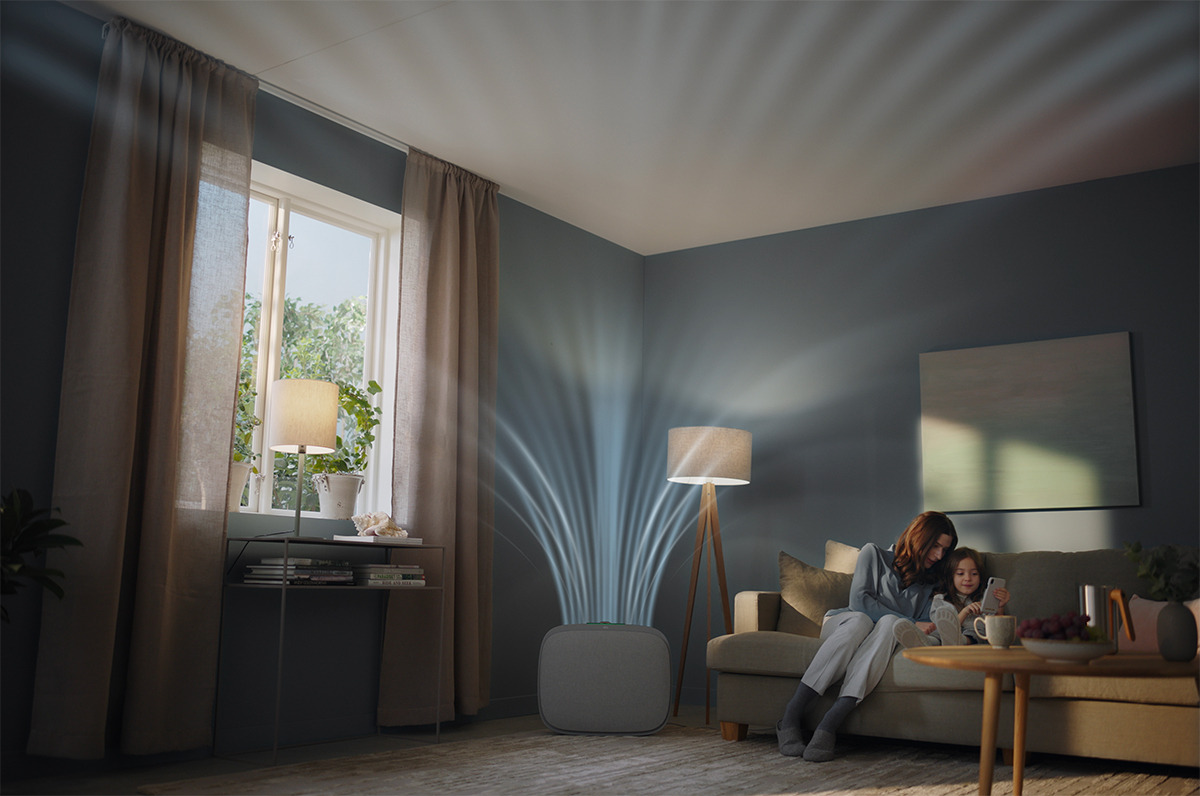
Air pollution levels both outdoors and indoors are becoming increasingly worrying. According to the Environmental Protection Agency, indoor air can be five times more polluted than outdoor air. Since indoor air does not circulate as much as outdoor air, many airborne pollutants continue to thrive indoors.
Air purifiers can refresh the air at home, thus reducing the risk of health problems caused by indoor pollutants, which can trigger respiratory infections, neurological issues or worsen symptoms in people with asthma.
In this article, we discuss how air purifiers work and the benefits of using them.
Benefits of an air purifier
Air purifiers fitted with HEPA filter technology can remove 99.7% of airborne particles circulating in your home environment. Removing these pollutants can bring several immediate and long-term health benefits, such as better sleep quality and increased life expectancy.
Relieves asthma symptoms
People with asthma have inflamed airways. Pollutants such as pet dander, pollen or dust mites irritate their airways, causing breathing difficulties.
Many breeds of dogs and cats shed throughout the year. When these animals scratch, they release a lot of hair and dander that continue to circulate in the air. Even if you do not have pets, there are other asthma triggers such as pollen and dust mites.
Pollen particles drift in on the breeze through open windows or stick to your clothes when you are outside. Dust mites are the most common indoor allergens, thriving in humid environments. Lack of fresh air increases indoor humidity levels, providing a fertile ground for dust mites. They feed on dead skin cells and multiply quickly in your bed and carpet.
Vacuuming your bed, carpet and floors can remove these pollutants, but some remain suspended in the air. Breathing polluted air increases the risk of asthma attacks.
Most domestic air purifiers contain HEPA filters, designed to capture all these pollutants so you breathe clean air. HEPA filters consist of multi-layer mesh made from fine glass fibre threads, finer than strands of hair. Pollen, dust mites and pet dander floating in the home environment are trapped in this mesh so you can enjoy clean air.
Some air purifiers include replaceable pre-filters to trap larger particles, so the HEPA filters remain preserved to capture smaller pathogens. This system extends the effectiveness of your air purifier.
Removes harmful chemicals from indoor environments
Closing the doors and windows of our home does not mean we can stop external pollutants such as nitrogen dioxide and carbon monoxide. These gases are common in areas with heavy road traffic and can enter your home.
Studies show that exposure to carbon monoxide and nitrogen dioxide increases the risk of dementia and Alzheimer’s disease.
Even if you do not live in large cities with heavy traffic, your home’s atmosphere could still be polluted by toxins from several cleaning agents. Many ordinary household cleaners contain toxic chemicals such as ammonia, bleach and phthalates. Exposure to these chemicals in small amounts may be harmless, but daily exposure can lead to serious health problems such as tumours, cancer, cardiovascular or neurological disorders.
Air purifiers with activated carbon filters can clean these chemical contaminants, thereby avoiding the risk of several health problems. A highly porous form of carbon is used in this carbon filtration method to trap chemicals.
Neutralises unpleasant odours
Certain chemicals such as petrol, benzene and formaldehyde break down at room temperature, producing a gaseous odour release. These chemicals, called volatile organic compounds (VOCs), are commonly found in paints, aerosols, upholstered furniture or air fresheners. The smell of VOCs can cause nausea, shortness of breath and even affect your cognitive functions.
Air purifiers with HEPA filters and activated carbon filters are effective at trapping gases as well as particles, thus reducing pollutants in the indoor environment.
If you have guests, you do not have to worry about smoke or the smell of cooking oil and spices bothering them. Air purifiers absorb all the odour, leaving your room fresh and clean.
Reduces the risk of airborne diseases
Airborne illnesses such as the common cold and flu spread through tiny pathogens that float in the air. When one family member catches the flu, it is common for the rest of the household to become ill too. This happens because everyone breathes the same air contaminated by bacteria and viruses.
Air purifiers with HEPA filters capture these bacteria and viruses. When you remove the source of airborne illness, you protect yourself and your family. If you live with older people, children or anyone with a weakened immune system, air purifiers are essential.
Improves sleep
Indoor allergens such as bacteria, mould and dust mites can trigger allergies or hay fever. Hay fever causes a runny nose and can last for several weeks. Frequent sneezing, coughing, nasal congestion, watery eyes or sore throat are common allergic symptoms that disrupt your sleep.
Lack of adequate sleep causes daytime sleepiness, affecting your productivity the next morning. To avoid these sleep disturbances, it is best to use air purifiers as they filter most allergens from your bedroom. Cleaner air gives you better sleep quality.
Removes harmful radon
The decay of natural radioactive elements such as uranium present in some building materials produces radon. Radon is a colourless, odourless gas emitted by building materials like rock, soil and granite.
Watch for cracks in the floor, walls or plaster. The carcinogenic radon gas seeps into your environment through these cracks. It damages the cellular lining of the lungs and can lead to cancer.
To reduce the risk of radon contamination, use air purifiers. HEPA and activated carbon filters can trap radon particles and the radon gas, protecting you from its harmful effects.
May increase life expectancy
Indoor air pollution can affect your cardiovascular, respiratory and even neurological systems. Chemicals and gases from common household products can build up in your lungs. In fact, airborne particles are so small they can cross the blood-brain barrier, impacting your brain and cognitive functions.
A good air purifier even traps fine particles, giving you better air quality.
Comments (0)